×
More detailschevron_right

Turnkey mobile app development (iOS/Android)

Development of Mobile App

Title Banner Image

Mobile apps have become an essential part of a business’s digital infrastructure. They simplify customer interactions, speed up order and appointment processing, help automate internal processes, and create an additional sales channel. For many companies, having a native app is no longer a matter of image, but a tool for systemic development.

AVADA MEDIA develops mobile apps for iOS and Android – from conception and design to publication in the App Store and Google Play. We create customer service systems, eCommerce apps, online booking systems, marketplaces, B2B dashboards, and corporate solutions with integration into a company’s existing IT infrastructure. Our approach is based on practical experience working with businesses across various industries, a deep understanding of both standard and non-standard tasks, and well-established development processes.

What tasks does a mobile app solve for business?

A mobile app is a working tool that directly impacts revenue, operational processes, and company management.

Key objectives a mobile app addresses:

  • Increase repeat sales and average order value. A mobile app simplifies repeat purchases by storing data, order history, and personalized recommendations. Push notifications re-engage customers at the right time – with reminders, promotions, or customized offers. This directly impacts LTV, order frequency, and overall revenue.
  • Shortening the path to the target action. Authorization, payment methods, and addresses are already saved – the customer places an order or makes an appointment in just a few steps. The fewer actions required from the user, the higher the conversion rate. For service companies, delivery services, clinics, and eCommerce, this is a critical growth factor.
  • Automation of operational processes. Online booking, order confirmation, status updates, and notifications are automated. This reduces the workload on staff and reduces manual operations. Businesses gain more predictable processes and save resources.
  • Direct communication channel with customers. Push notifications allow you to promptly inform users about service statuses, changes, promotions, and new features. Unlike advertising or social media, this is a direct and manageable communication channel.
  • Self-service and transparency for the client. A personal account with order history, payments, documents, and bonuses reduces the number of support requests. The user has quick access to all information and manages services independently.
  • Reduced losses and human error. All requests and actions are recorded in the system, minimizing errors, duplication, and data loss. Integration with CRM and internal systems creates a transparent process structure.
  • Integration into a unified digital ecosystem. The application connects with CRM, ERP, payment services, warehouse, and logistics modules. This unites disparate processes into a single, manageable system and simplifies monitoring.
  • Data for management decisions. Analytics on sales funnels, conversion, retention, and user behavior allow you to evaluate product effectiveness and adjust your development strategy based on data.
  • Scaling without a proportional increase in costs. Automated processes and digital service channels allow for increased client numbers without significantly expanding the team. The app becomes the foundation for sustainable business growth.
Screenshot
Screenshot
Screenshot
Screenshot

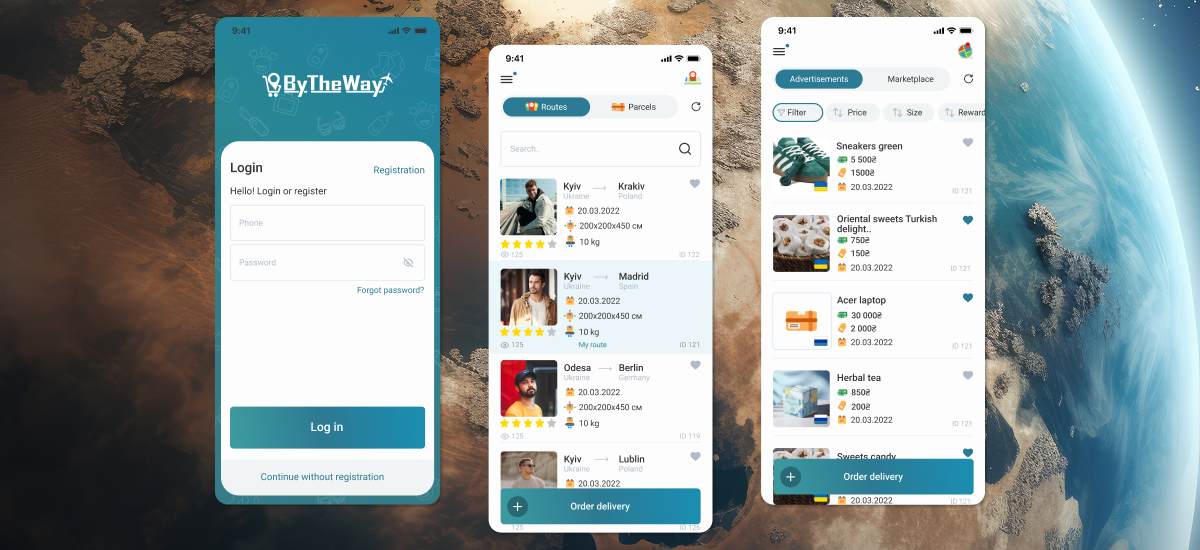
Mobile food delivery app interfaces

When a Mobile App Is Really Needed (and When It’s Better to Start with a Web Solution)

A mobile app is an effective tool, but not a universal answer for every business. The decision depends on business goals: sometimes a full-fledged app is needed, and sometimes a website is enough at the start.

It makes sense to launch an app if:

  • There are frequent repeat purchases or regular bookings. If customers interact with the service weekly or monthly, an app simplifies return visits and increases retention. This is relevant for delivery, healthcare, fitness, taxi services, eCommerce, and subscription services.
  • The service includes complex scenarios. Status tracking, transaction history, personal accounts, loyalty programs, multiple user roles – such processes are more удобно to implement in a mobile app, where the interface and logic are fully controlled.
  • Personalized communication is important. Push notifications allow targeted interaction with the audience: reminders, statuses, personalized offers. If customer retention is a key goal, the app becomes a powerful tool.
  • Device capabilities are required. Offline mode, camera access, geolocation, QR code scanning, biometrics, push services – these features work more reliably and faster in native apps.

It is more rational to start with a website or PWA if:

  • Sales are one-time. If customers make a single purchase and do not return regularly, investing in an app may not pay off at the start.
  • There are no resources for maintenance and development. An app requires updates, adaptation to new iOS and Android versions, and technical support. Without this, the product quickly loses relevance.
  • The business model or monetization has not been tested. If the hypothesis has not been validated and there is no clear understanding of how the product will generate revenue, it makes sense to start with a lighter solution – for example, a web version or MVP.
Screenshot
Screenshot
Screenshot
Screenshot
Screenshot

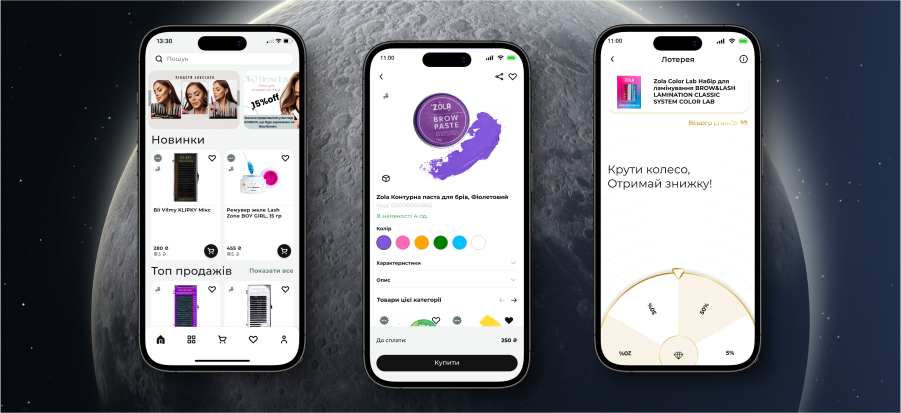
Learning app

Development Formats – What to Choose

The choice of format affects the efficiency of your business. We create turnkey mobile apps that help quickly test ideas, automate processes, and scale services. This approach saves resources, accelerates results, and makes the product useful both for customers and for your team.

Three main development formats that companies choose:

1) MVP (Pilot Version)

Minimum functionality for launch and idea validation.
Suitable if:

  • You are launching a new product or service and want to enter the market quickly;
  • It is important to test demand and understand which features users really need;
  • The budget is limited, but a working product with growth potential is required;
  • You plan to present the product to investors or test the business model.

MVP allows you to get user feedback and evaluate the effectiveness of ideas without large investments, creating a foundation for further growth.

2) Business App (Full Business Version)

A full-featured app with key modules, integrations, and role management.
Suitable if:

  • You already have a clear business model and processes and need to implement a working tool immediately;
  • Integration with CRM/ERP, payment systems, warehouse, delivery, telephony, and analytics is important;
  • An admin panel, role distribution, and reporting are required;
  • Growth is planned and a scalable-ready product is needed.

This format allows you to automate processes, unite users and customers into a single system, and obtain manageable analytics.

3) Enterprise / Custom

A corporate app for high load, security, and complex business processes.
Suitable if:

  • You already have a working app or system and need scaling or a complete architectural redesign;
  • You clearly understand business processes and product requirements based on real operational experience;
  • A large user base and high transaction frequency require high-load stability;
  • Enhanced security, auditing, access control, and logging are required;
  • A complex architecture with many integrations into internal systems is needed;
  • There are regulatory requirements or the business operates in multiple countries / branches.

Enterprise solutions are created with scalability, high-load resilience, and compliance with strict industry requirements in mind.

The AVADA MEDIA team implements projects of any complexity – from MVP to Enterprise solutions with integrations and scalable architecture. If you are not sure which format to choose, we will conduct a consultation, analyze your goals and processes, and offer the optimal development scenario with timelines and budget estimates.
Screenshot
Screenshot
Screenshot
Screenshot
Screenshot

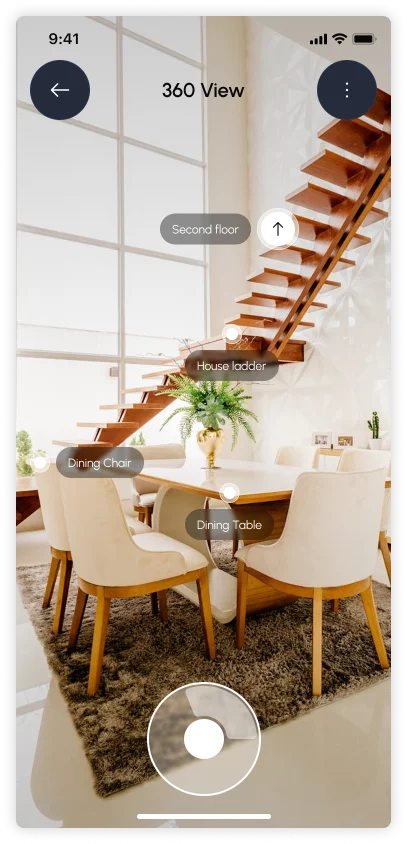
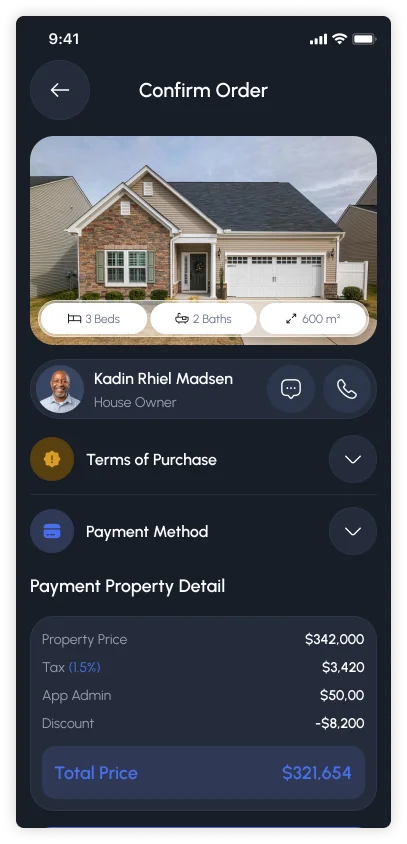
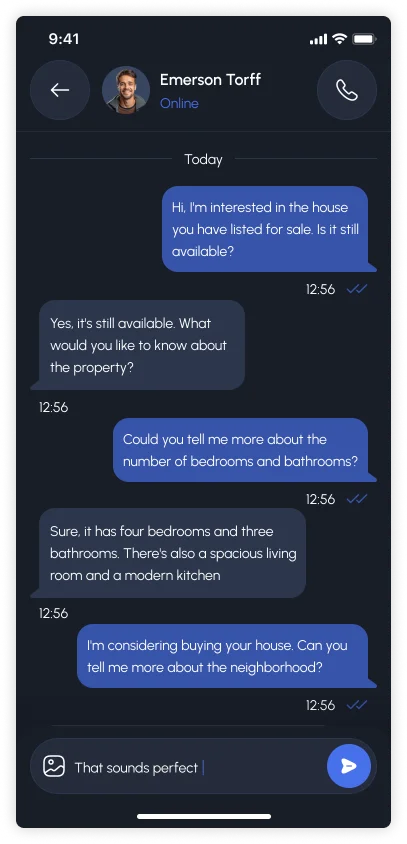
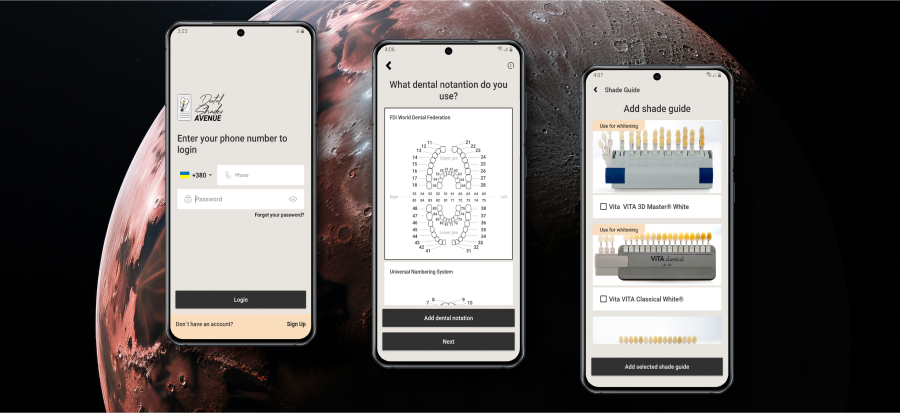
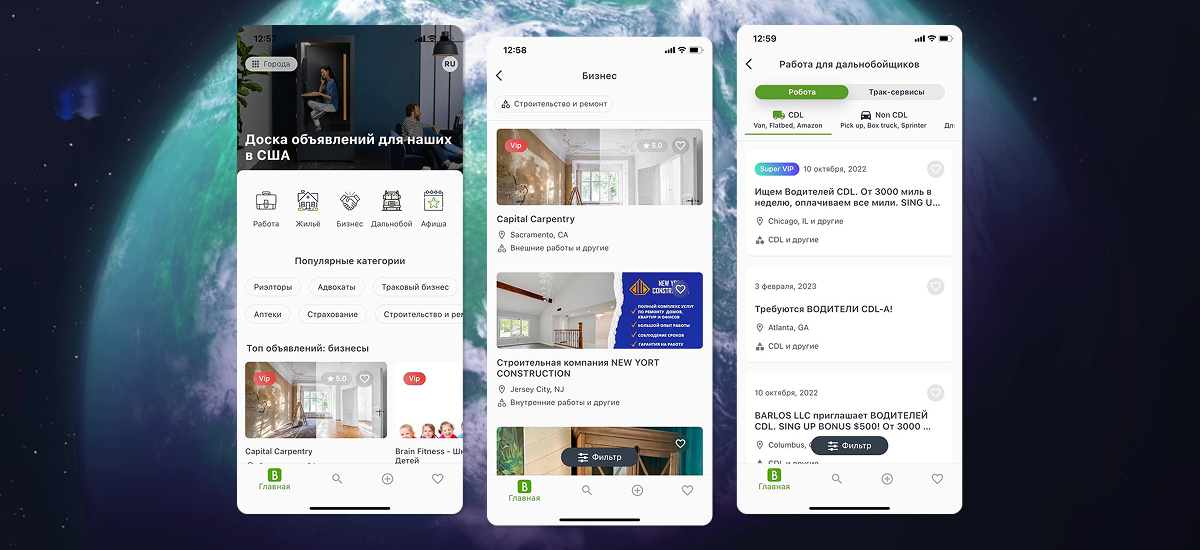
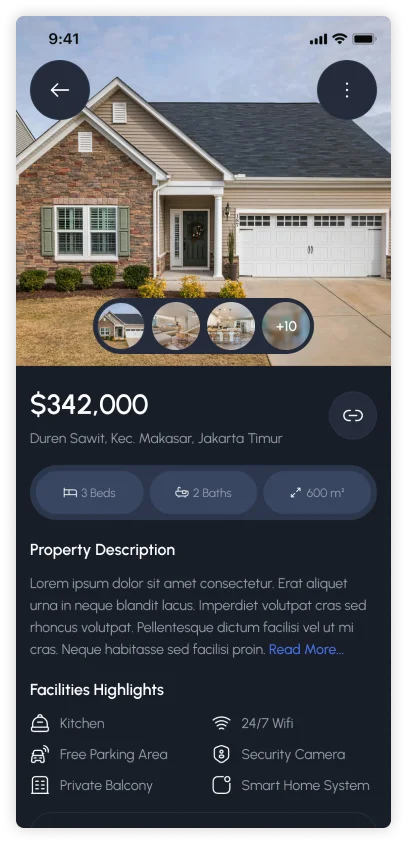
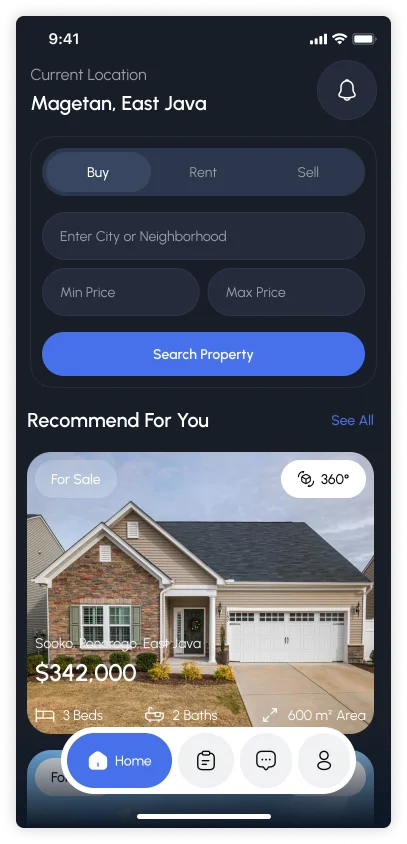
Screeens of mobile app for Real Estate business

Mobile Apps for Business: Directions and Use Cases

We develop mobile apps for various industries and tasks. Below are the main directions and functions most often included in business mobile apps:

  • Taxi, car sharing, and urban services. Apps help users order rides, track vehicles on a map, pay online, and leave reviews. Push notifications about ride status and personalized offers are often added.
  • Restaurants, cafes, food delivery and reservations. Users can place orders online, book tables, pay through the app, receive notifications about discounts, and get personalized recommendations.
  • Health, sports and fitness services. Apps for booking workouts, tracking activity, personalized programs, and payments. Notifications, trackers, and integrations with wearable devices can be added.
  • Hotels, hospitality and travel services. Online room booking, reservation management, digital keys, push notifications about special offers, and integrations with maps and payment systems.
  • Beauty salons, barbershops and service businesses. Apps for booking services, managing schedules, booking status notifications, and loyalty programs.
  • Online stores (eCommerce) and D2C brands. Product catalogs, shopping carts, online payments, order history, push notifications about discounts, and personalized recommendations.
  • Marketplaces and catalogs. Buyers can browse products or services, filter and compare, place orders, pay online, and track delivery status.
  • Logistics, delivery and courier services. Apps for real-time order tracking, route management, customer notifications, and automation of delivery statuses.
  • Healthcare: clinics, dental offices, laboratories. Online appointment booking, visit reminders, access to test results, and integration with electronic patient records.
  • Financial and payment services (fintech). Account management, transfers, online payments, transaction notifications, integrations with banks and security systems.
  • Subscriptions and digital services (SaaS / membership). Subscription management, access to content, notifications about new features, payments, and personalized offers.
  • B2B applications. Customer portals, partner dashboards, employee apps (Field Service, internal processes), CRM and analytics integrations, business process automation.

Development Technologies and How to Choose

When creating a turnkey mobile app, it is important to understand which technologies to use and how they affect speed, budget, and product capabilities.

Native or Cross-platform – what to choose:

  • Native – if maximum performance is required.
    We use Swift for iOS and Kotlin for Android. The app is fully adapted to a specific platform, works fast and stably, and allows the use of all device capabilities – camera, GPS, sensors. This option is suitable for complex, high-load projects.

  • Cross-platform – if speed and cost-efficiency are important.
    We use Flutter and React Native, with one codebase for both iOS and Android. This reduces development time and simplifies maintenance. A good option for startups, MVPs, or projects where fast launch and modern UI are key.

Cost and Development Timelines

When ordering a turnkey mobile app, it is important to understand approximate timelines and budgets. Below are three main development packages that help estimate the project and choose the appropriate format:

Format Timeline Budget Technology What’s Included Best For
MVP / Pilot 2–3 months from $10,000 – $12,000 Cross-platform (Flutter / React Native) Authentication, basic catalog or services, order or booking flow,
one payment system, push notifications, basic admin panel, simple analytics
Idea launch, demand validation, business model testing
Business 3–5 months from $12,000 – $20,000 Cross-platform / Native User account, role management, CRM/ERP integrations,
multiple payment systems, loyalty program, analytics,
scalable architecture
Companies with established processes and a clear business model
Enterprise / Custom 4–6+ months from $35,000+ Native (Swift / Kotlin) or hybrid architecture High-load architecture, microservices, advanced access control,
audit and logging, multiple integrations, scalability, enhanced security
Enterprises with a large user base and complex business processes


This approach makes it clear what the price is based on and which features affect the project budget.

Screenshot
Screenshot
Screenshot
Screenshot

Travel app

Stages of Turnkey Mobile App Development

Each stage is designed so that you receive real value and understand how the project is progressing.

  1. Analytics. We study your goals, business processes, and user needs.
    What the client receives: a document with the main app objectives, functional requirements, and reference examples.
  2. Prototyping (Moqups). We create a draft interface to visually see element placement and navigation.
    What the client receives: a working prototype to discuss the app’s interface and structure, allowing adjustments before development begins.
  3. UI Kit Design (Figma). We develop the style, color palette, buttons, and interface elements to make the app convenient and modern.
    What the client receives: a complete UI Kit and visual mockups of all screens.
  4. Backend and Mobile Development. We develop the server-side, databases, and mobile app with the functionality described in the prototype.
    What the client receives: a working app on a test server, ready for integrations and testing.
  5. Integrations. We connect CRM/ERP, payment systems, maps, push notifications, and other required services.
    What the client receives: a fully integrated app with the necessary external services, ready for use.
  6. QA and Test Plans. We conduct functional, load, and user testing to ensure the app works without errors.
    What the client receives: test reports, fixed bugs, and confidence in the app’s stability.
  7. Publication in the App Store and Google Play. We prepare all materials and publish the app in the stores.
    What the client receives: an app available for download that fully meets platform requirements.
  8. Support and Development. We provide updates, fixes, and feature additions as your business grows.
    What the client receives: an up-to-date, secure, and scalable app that continues to deliver value.

The development process is organized so that you have full control and understanding of each stage. The AVADA MEDIA team ensures project delivery from idea to a ready, scalable product.

AVADA MEDIA: Building Products That Work for Business

We create mobile apps with real business processes and user needs in mind. For over 10 years, we have implemented projects for eCommerce, fintech, healthcare, service, and corporate companies – which is why we offer solutions built on client business logic rather than template features. This approach ensures scalability, reliability, and long-term product efficiency.

Why clients choose us:

  • In-house expert team – developers, designers, and analysts with experience delivering projects across various industries.
  • Modern technologies – Swift, Kotlin, Flutter, and React Native, enabling stable and high-performance solutions.
  • Transparent timelines – project milestones are agreed in advance and strictly adhered to.
  • Full support – assistance at all development stages and after release, updates, and feature growth.
  • Business logic, not templates – solutions are built around your company’s real needs, not a generic feature set.

Want to know how much a turnkey mobile app will cost and how it can help your business? Leave a request via the form or email us – we will prepare for you:

  • A project cost estimate.
  • A development plan with stages and timelines.
  • Recommendations on the optimal app format.

Questions & Answers

Screenshot ×
Have a question?

Contact the experts Have a question?

+
@

Developed by AVADA-MEDIA

Personal data processing agreement

The user, filling out an application on the website https://avada-media.ua/ (hereinafter referred to as the Site), agrees to the terms of this Consent for the processing of personal data (hereinafter referred to as the Consent) in accordance with the Law of Ukraine “On the collection of personal data”. Acceptance of the offer of the Consent is the sending of an application from the Site or an order from the Operator by telephone of the Site.

The user gives his consent to the processing of his personal data with the following conditions:

1. This Consent is given to the processing of personal data both without and using automation tools.
2. Consent applies to the following information: name, phone, email.

3. Consent to the processing of personal data is given in order to provide the User with an answer to the application, further conclude and fulfill obligations under the contracts, provide customer support, inform about services that, in the opinion of the Operator, may be of interest to the User, conduct surveys and market research.

4. The User grants the Operator the right to carry out the following actions (operations) with personal data: collection, recording, systematization, accumulation, storage, clarification (updating, changing), use, depersonalization, blocking, deletion and destruction, transfer to third parties, with the consent of the subject of personal data and compliance with measures to protect personal data from unauthorized access.

5. Personal data is processed by the Operator until all necessary procedures are completed. Also, processing can be stopped at the request of the User by e-mail: info@avada-media.com.ua

6. The User confirms that by giving Consent, he acts freely, by his will and in his interest.

7. This Consent is valid indefinitely until the termination of the processing of personal data for the reasons specified in clause 5 of this document.

Join Us

Send CV

+
@
I accept User agreement and I give my consent to processing of my personal data